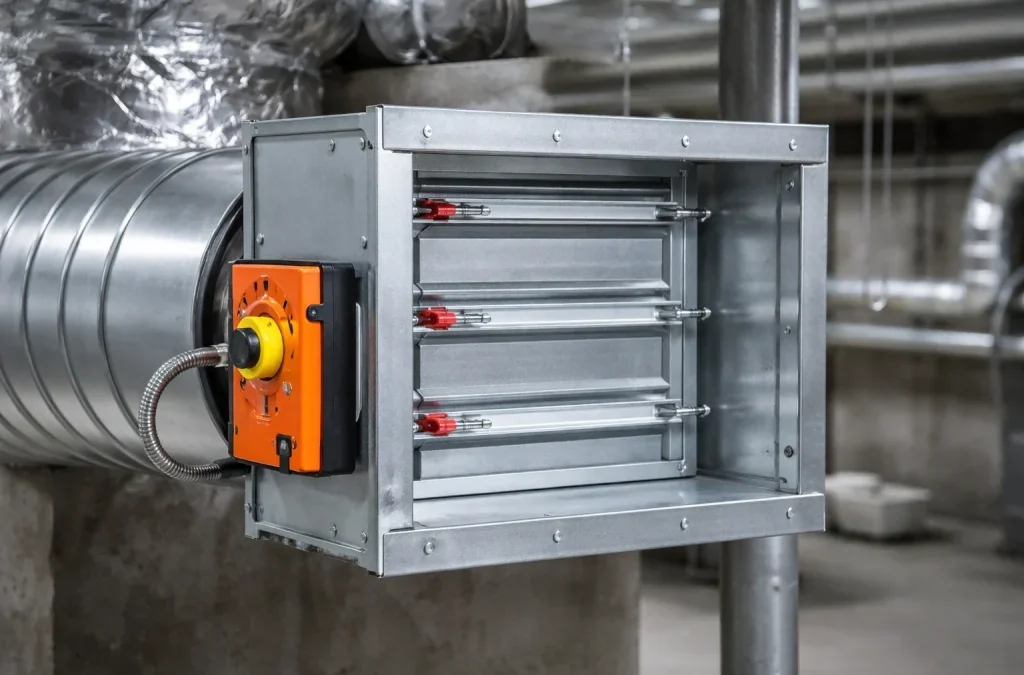
Fire dampers are one of the most important, yet often overlooked, components of a building’s passive fire protection system. Hidden within ductwork, they play a critical role in preventing the spread of fire and protecting both people and property.
Understanding how fire dampers work, where they’re used, and why they need regular maintenance is essential for any building owner or facility manager.
What Is a Fire Damper?
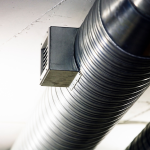
A fire damper is a passive fire protection device installed within HVAC ductwork where it passes through fire-rated walls or floors. Its primary function is to prevent fire and heat from spreading through these openings.
In normal operation, the damper remains open to allow air to flow freely through the system. However, when exposed to high temperatures, it automatically closes, sealing off the duct and helping to contain the fire to its point of origin.
This simple but effective mechanism is a key part of maintaining a building’s fire compartmentation strategy.
How Do Fire Dampers Work?
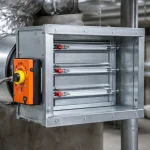
Fire dampers are activated by heat. Most systems use a fusible link or thermal actuator that responds when temperatures rise to a specific level.
When this threshold is reached:
- The fusible link melts or the actuator triggers
- The damper blades are released
- The blades close automatically, blocking the duct
By closing off the airflow, the damper prevents flames, and temperature from travelling through the ventilation system and spreading to other parts of the building.
Why Are Fire Dampers So Important?
Without fire dampers, ductwork can act as a pathway for fire to spread rapidly between rooms, floors, or compartments.
Fire dampers help maintain the integrity of fire-rated walls and floors while containing fire within a specific area. They also slow the spread of heat, providing valuable time for evacuation and emergency response.
Types of Fire Dampers
There are several types of fire dampers used depending on the application and building requirements:
- Curtain-type dampers – Commonly used in horizontal ducts
- Multi-Blade dampers – Designed for larger openings and higher airflow
- Combination dampers – For areas needing both fire and smoke control
- Intumescent dampers – These are a single use damper and when activated they require replacement.
Each type is designed to meet specific fire resistance and installation requirements.
The Importance of Inspection and Maintenance
Because fire dampers are hidden within ceilings and ductwork, they can easily be overlooked, but they must be regularly inspected and tested to ensure they will function correctly in an emergency.
Over time, issues such as dust and debris build-up, mechanical failure or incorrect installation or modifications can prevent dampers from operating as intended.
Regular inspection, testing, and certification in line with Australian Standards is essential to maintaining compliance and ensuring the system performs when it’s needed most.
If you’re unsure whether your fire dampers are compliant or due for inspection, the Coral Fire team can help. We provide inspection, testing, and maintenance services to ensure your systems are functioning as intended and meet current standards. Get in touch with our team to arrange a review.